6/8/22 – 6/15/22
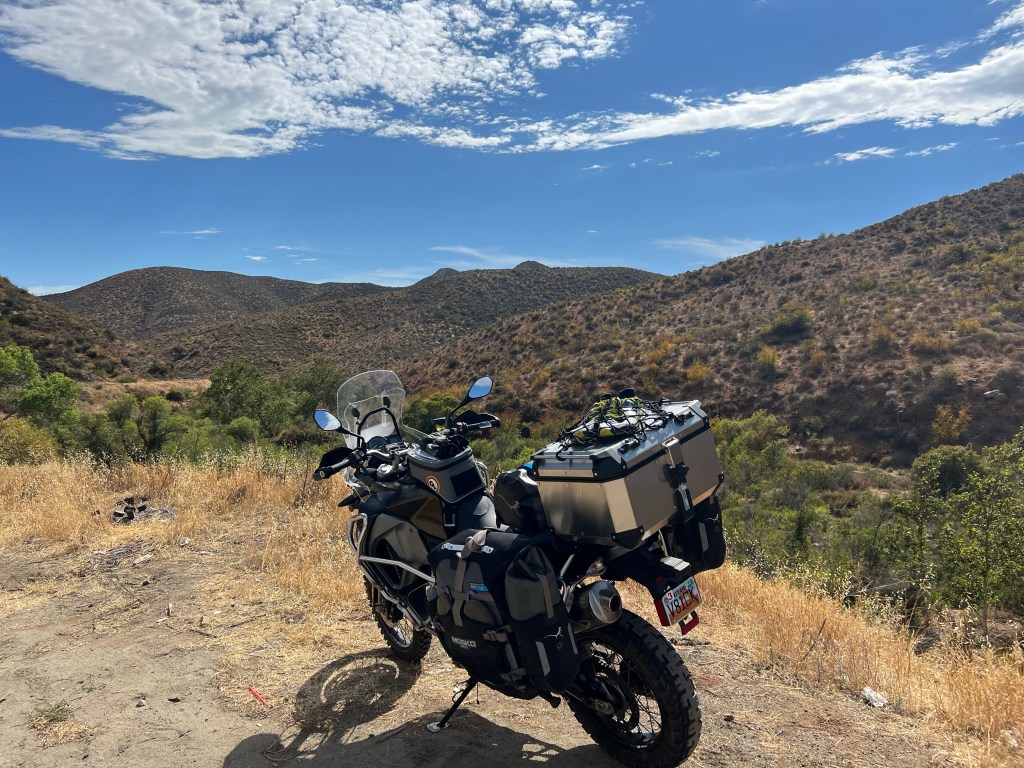
After enjoying the flavors and unique cuisine of northern Baja’s version of Napa for about a week, I decided to leave Valle de Guadalupe. Though rustic restaurants serving farm-to-table food is one of my favorite things on the planet, I felt the need to keep moving south. I think I stayed there for a significant period of time out of a need for rest. I have been moving at a rapacious rate ever since the beginning of the pandemic. Most folks took advantage of the pandemic as a means to shifting into a slower pace of life, that was not the case for me.
When the pandemic hit back in the spring of 2020 I was reeling from a very recent separation from a woman with whom I had been together for roughly 7 years (and with whom I still have deep emotions for). I had also just quit farming as a profession, moved back to Utah from Vermont, had a close family member experience serious health complications, and started a garden-to-table café as a means to a livelihood. In other words, I was doing a lot and feeling a lot. I had entered into the most emotionally difficult time in my life – in a lot of ways that time has not ended for me. I am still experiencing complex emotions due to all that I incurred over the past couple of years. (As I imagine a lot of folks experienced from the pandemic.)
Because of all of the emotional difficulties that I have experienced, I have done a lot and I am continuing to do a lot to heal. This ride is one aspect of that healing. I think that my time in the Valle was the beginning of a release. I felt as though I could breathe for the first time in a very long time when I didn’t have any pressing responsibilities. I felt free for the first time in many years. It also felt wonderful to attend a wedding. To dance. To laugh with strangers. To eat cake. To flirt with a beautiful woman. To have an excuse to wear a tie that wasn’t for a funeral.
After filling up on positive emotions and experiences, I decided to hit the road again and make my way towards the south of Baja. Along the way I came across some fairly depressing sites. My first stay outside of Valle de Guadalupe was outside of a town called San Quintin. It is there that I was reminded of the darkness that exists in this world. Life is full of love and its inverse: hate. It is always difficult for me to see what I call “extraction zones.” Extraction zones are places that are designated as sacrifice zones for the globalized neo-liberal economy. They are the manifestations of a culture that sees life as a commodity, as a resource to profit off of. It is a colonial mindset that originates in manifest destiny that permits extraction zones. It is the inverse of love that permits extraction zones.
Driscol and other multinational agricultural corporations facilitate the cultivation of mono-crops for as far as the eye can see on the headlands of the Pacific Ocean in the area about 50 miles south of Ensenada.
The area’s native habitats are biologically rich with beautiful succulent plants, unique bird species (I saw some burrowing owls there!), and mild weather. Yet large swaths of land are covered in mono-cropped strawberries, blackberries, and tomatoes. Fumigants that are known to cause cancer are more than likely sprayed. Workers enter greenhouses in medical-looking white suits that cover every part of their body in order to mitigate the introduction of disease. Synthesized nitrogen is used. Pesticides are used. Workers are exposed to those toxic inputs and compensated little. Large fences prevent most people from being able to see the plots of land that are in cultivation. Barb wire cover the tops of those fences to either keep people out, or in – I am not sure… Signs tell onlookers it’s prohibited to take photos. Neighboring towns are depressing/depressed. Trash is everywhere. And, I mean everywhere. It all feels like a prison. Love is devoid. This is an extraction zone.
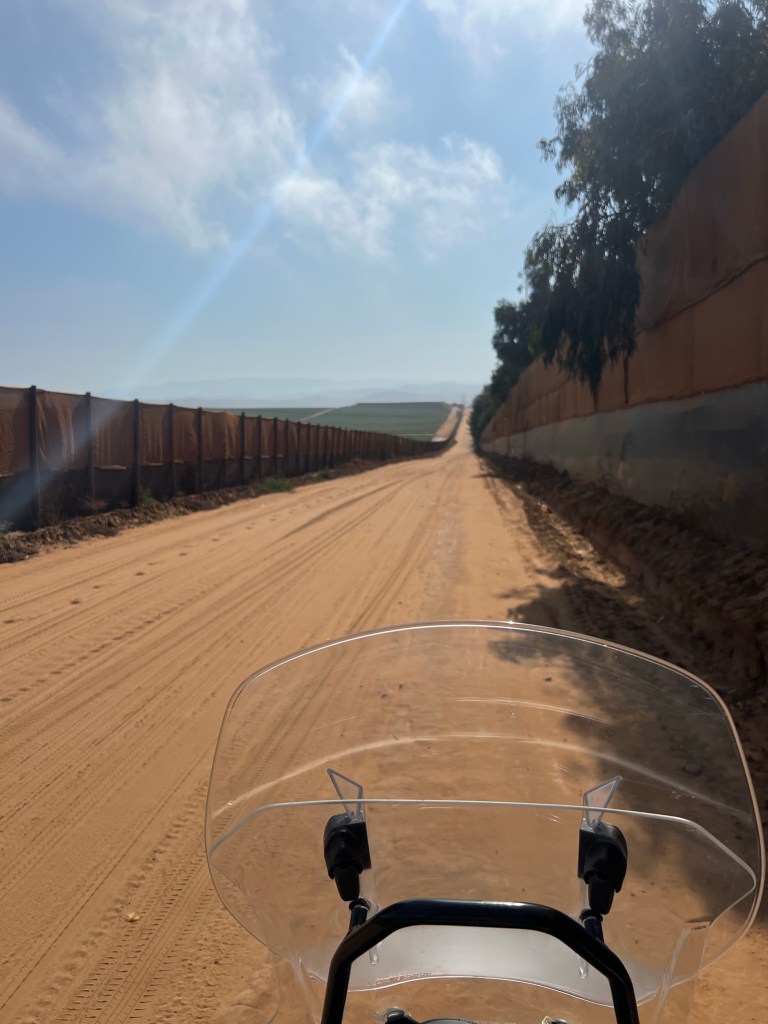
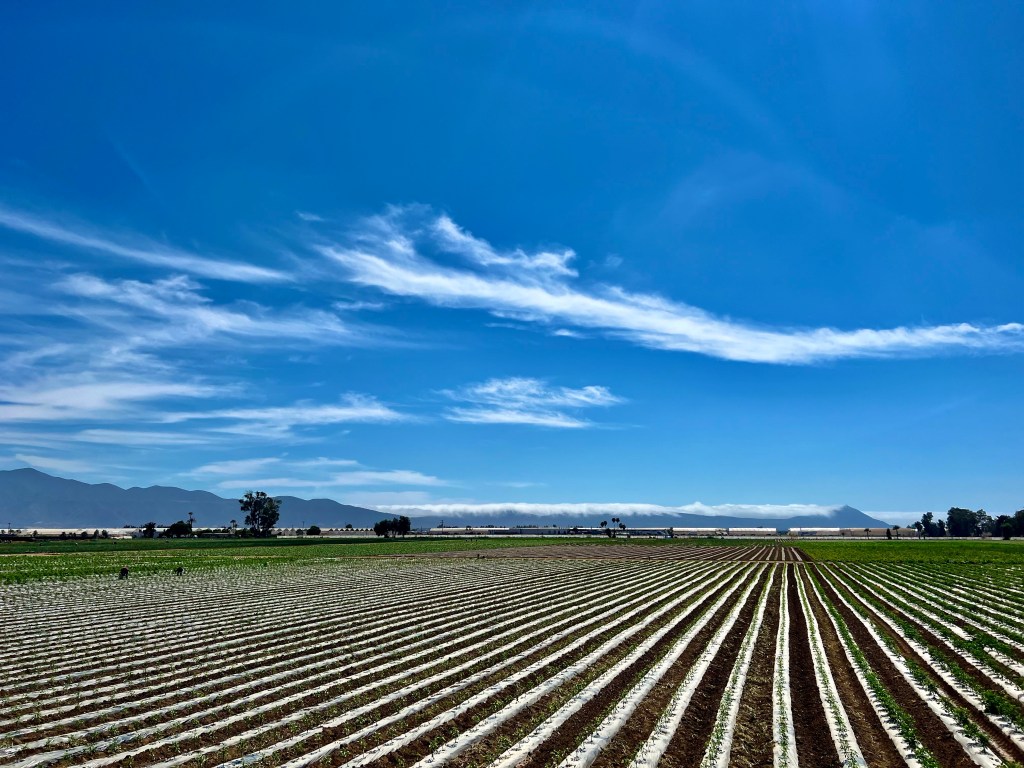
Americans like having “cheap” food and this is how they get it. Their purchasing practices and policies require sacrifices in other places so things can be inexpensive at the supermarket. It’s a perverse perpetuation of the colonist mindset that permits this way of thinking and it lacks love.
Indigenous peoples, though not monolithic, do not perceive life in this way. Life is interconnected. Resources are not resources. Other than human life are our brothers and sisters. They cannot be commoditized. We humans do use other life to live, but it is with grace and thanks that we should use it. It is the inverse of indigenous that permits life to be treated like a commodity.
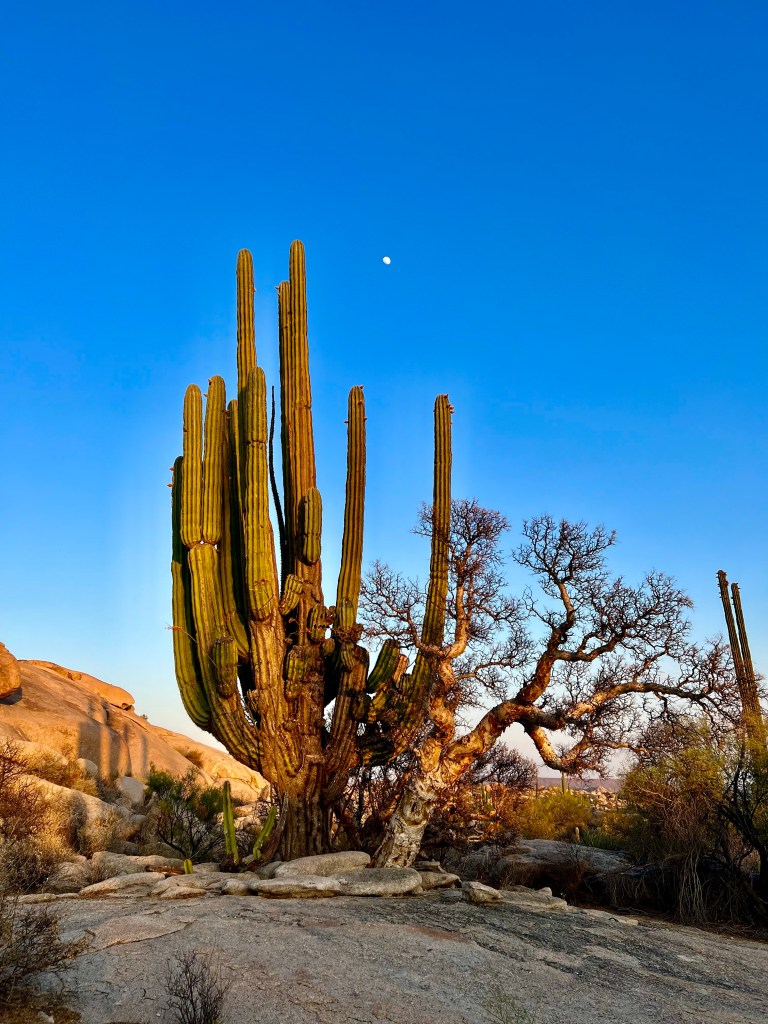
After traversing the darkness of industrial agricultural extraction zones, I made my way inland through a dream-like desert landscape. Large saguaro-like cactuses (cardons), giant cirios (a succulent that can tower roughly 60’ high and is the slowest growing plant in the world), elephant trees, flowering yucca, various species of chola cactuses, and giant boulders combine to make one feel as if you are in a Doctor Seuss’ book.
This is Cochimi people’s land. It is the place of dreams.
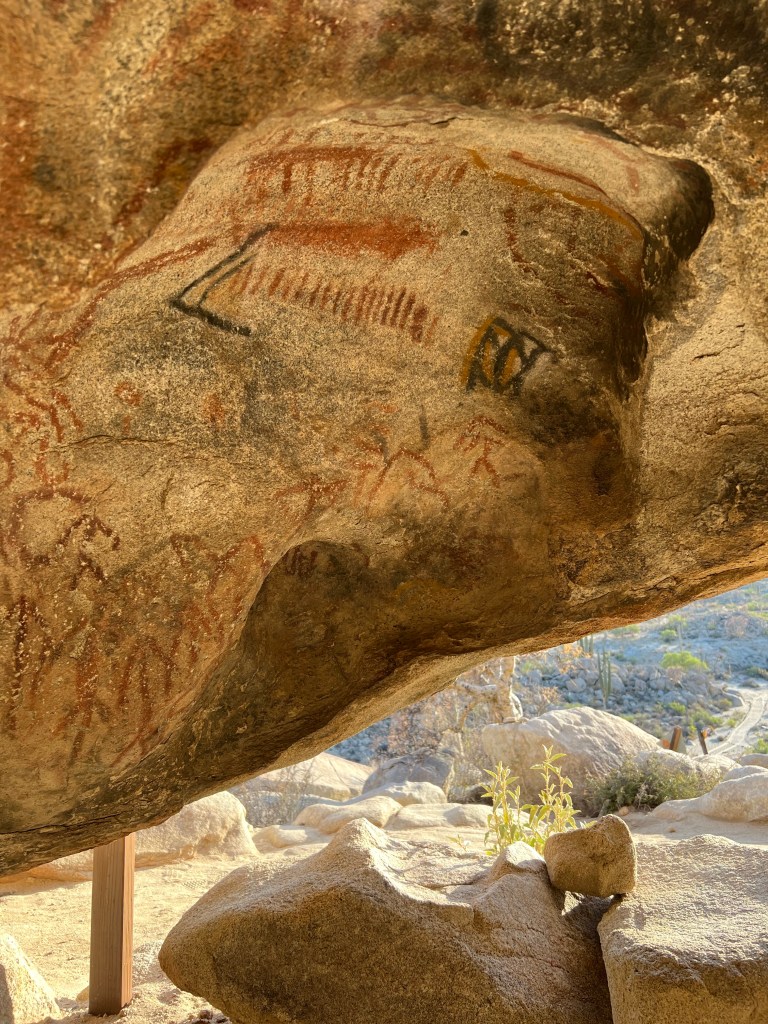
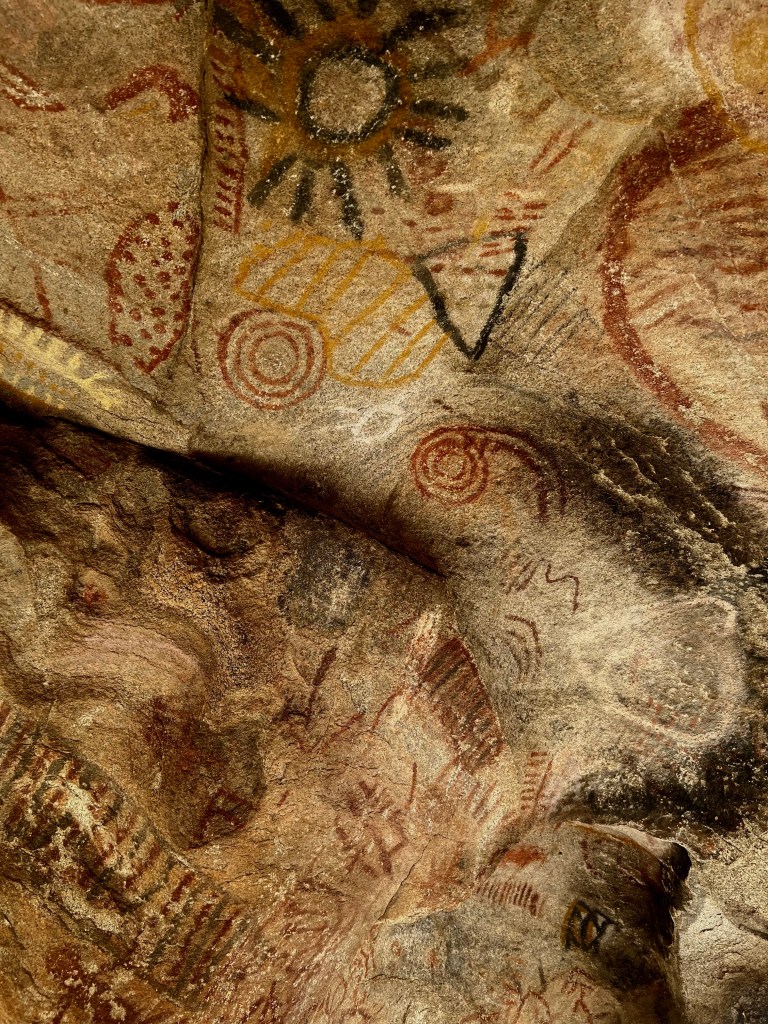
It was about a 4.5 ride through the desert to Cataviña, an oasis town. I had read that there were cave paintings close by. I wanted to see whatever I could of who inhabited these lands pre-colonization. The paintings were in a cave that one could reach fairly easily from Highway 1.
The cave was small. I and probably one other person could be in the cave at the same time. Yet, there was a lot to see in that small space. I laid down and stared up at the cave paintings that are upwards of 5,000 years old. It felt like I could feel who these people were. They must have been strong. To live in such a rugged landscape must have created a unique peoples. The human species is capable of so much. We are so special. Our ancestors were special.
Love was in that cave.
 Motorcycle Ventures Into Latin America
Leave a comment